
Skip to content
Neopay
  • home
  • services
    • Compliance Consulting Services
    • Compliance Development
    • Authorisation and Licensing
    • Maintaining Compliance
    • Integrated Managed Services
  • about
  • Our Customers
  • news
  • contact
  • home
  • services
    • Compliance Consulting Services
    • Compliance Development
    • Authorisation and Licensing
    • Maintaining Compliance
    • Integrated Managed Services
  • about
  • Our Customers
  • news
  • contact

News

Digital payments continue to grow as mobile wallets become more popular across the UK

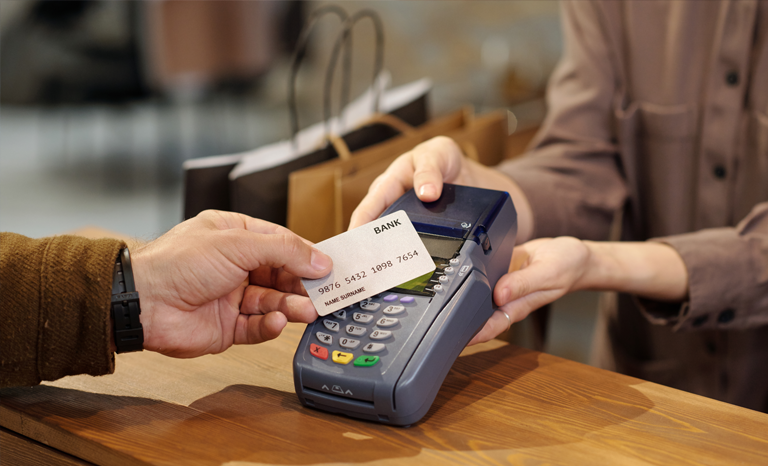
contactless payment
Facebook
Twitter
LinkedIn
  • August 21, 2026
New figures from UK Finance show how payment habits in the UK continue to evolve.

Key findings from UK Finance’s Payment Markets Report for 2025 show that:  

  • Total payment volumes reached 49.7 billion in 2025, up two per cent year on year.
  • Debit cards remained the UK’s most‑used payment method.
  • Card payments accounted for 64 per cent of all payments, driven by widespread acceptance, extensive use of contactless, and rising mobile wallet use.
  • There are now more than 100 million contactless debit cards in the UK.
  • Nearly two thirds of the population are registered for a mobile wallet.
  • Cash usage fell again, accounting for eight per cent of all payments – but the decline appears to be slowing.

Cards, contactless and mobile wallets

Cards and digital payments continue to dominate consumer spending. Debit cards accounted for more than half of all payments in 2025, remaining the UK’s most‑used payment method. 

Contactless payments – whether made using a physical card or a mobile device – rose by two per cent to 19.2 billion, representing 39 per cent of all payments. A decade ago, contactless made up just three per cent of transactions. 

Mobile wallet usage continues to become more widespread since the launch of mobile payments in 2015. 65 per cent of UK adults were registered for at least one mobile payment service in 2025, up from 57 per cent in 2024.  

Users who adopt mobile wallets typically become frequent users, and mobile contactless is increasingly replacing physical card contactless. Mobile wallet adoption varies by age however: 89 per cent of 25–34-year-olds are registered, compared with 29 per cent of over 65s. 

Faster Payments and remote banking

Remote banking continues to be the default way people manage their finances, with 91 per cent of UK adults using at least one form of online, mobile or telephone banking in 2025. This was an increase from 88 per cent in 2024. Mobile banking remains the preferred option, used by 75 per cent of adults.

Account‑to‑account payments also continue to grow. Faster Payments and other remote banking payments reached 6.2 billion in 2025, making them the second most‑used payment method in the UK, behind debit cards. Volumes rose 10 per cent year on year, driven particularly by increased business usage.

Over the past decade, consumer growth has been fuelled by people using Faster Payments to split bills and send money to friends and family – replacing transactions that were once made in cash.

Cash

Cash usage continued to decline, falling to 3.9 billion payments in 2025, down from 4.3 billion the previous year. Cash represented eight per cent of all payments, compared with nine per cent in 2024 and 45 per cent in 2015.

Despite the long‑term decline, the move away from cash appears to be slowing, reflecting the fact that cash remains important for many people. Around 1.4 million people – three per cent of UK adults – mainly use cash for their day-to-day spending. Maintaining appropriate access to cash therefore remains an important priority, ensuring that consumers retain choice and that no one is left behind as payment preferences continue to evolve.

At the same time, however, 19 million people – a third of UK adults – use cash once a month or less frequently, reflecting the wide variation in people’s preferences about how to pay for things.

Innovation and looking ahead

Payments are critical to the UK economy, and the continued ability to easily make and receive payments in a secure and trusted way is essential to our daily lives.

The Payment Markets Report looks ahead to 2035, forecasting continued growth in digital payments alongside a stable, residual role for cash.

Innovation across the sector is accelerating, supported by the government’s National Payments Vision and significant investment to modernise the UK’s retail payments infrastructure. New technologies and payment models are expanding consumer choice and reshaping how money moves.

In future, innovations such as account-to-account payments at the point of sale may offer increased choice to consumers and businesses alike.

Continued close engagement between government, regulators and industry will be essential to provide the clarity, certainty and pace needed to unlock investment, support innovation, and ensure the UK retains its position at the forefront of payments.

Adrian Buckle, Head of Research at UK Finance, said:  

UK Finance’s latest data show that the UK is now a predominantly digital economy when it comes to making and receiving payments. Faster Payments continue to grow strongly, while cards remain central to everyday spending. 

The trends of the past decade are becoming increasingly established. Cash usage is declining, albeit more gradually, and growth across many payment methods is stabilising as the market matures. 

The industry is now entering a new phase of innovation. New payment technologies have the potential to reshape how people and businesses move money, and continued close engagement across government, regulators and industry will be essential to unlock that potential.

Source: UK Finance

Facebook
Twitter
LinkedIn

Related Posts

AEMI authorisation cost guide for UK electronic money institutions

How Much Does It Cost to Become an Authorised Electronic Money Institution (AEMI) in the UK?

September 11, 2026
AEMI authorisation costs at a glance The AEMI authorisation cost involves much more than the application fee paid to the Financial Conduct Authority (FCA). Firms also need to consider capital
Read More >
SPI registration cost guide for UK Small Payment Institutions

How much does it cost to register as a Small Payment Institution (SPI) with the FCA?

August 26, 2026
Summary The costs of registering to become an SPI will vary depending on your size and business model, but you should expect to budget for the following. What are the
Read More >
Contact

Neopay Limited
167-169
Great Portland Street, 5th Floor
London, United Kingdom
W1W 5PF

Tel: +44 207 404 7477
Email: info@neopay.co.uk

Useful Links
  • About
  • Our Customers
  • News
  • Contact
  • Privacy Policy
  • Copyright Notice
  • Disclaimer
  • Sitemap
Services
  • Compliance Consulting Services
  • Compliance Development
  • Authorisation & Licensing
  • Maintaining Compliance
  • Virtual Compliance Service
Connect On Social
Facebook Twitter Linkedin

Copyright © 2023. 

Website Design by Digital Footprints
We use cookies on our website to give you the most relevant experience by remembering your preferences and repeat visits. By clicking “Accept”, you consent to the use of ALL the cookies.
Cookie settingsAccept
Manage consent

Privacy Overview

This website uses cookies to improve your experience while you navigate through the website. Out of these, the cookies that are categorized as necessary are stored on your browser as they are essential for the working of basic functionalities of the website. We also use third-party cookies that help us analyze and understand how you use this website. These cookies will be stored in your browser only with your consent. You also have the option to opt-out of these cookies. But opting out of some of these cookies may affect your browsing experience.
Necessary
Always Enabled
Necessary cookies are absolutely essential for the website to function properly. These cookies ensure basic functionalities and security features of the website, anonymously.
CookieDurationDescription
cookielawinfo-checbox-analytics11 monthsThis cookie is set by GDPR Cookie Consent plugin. The cookie is used to store the user consent for the cookies in the category "Analytics".
cookielawinfo-checbox-functional11 monthsThe cookie is set by GDPR cookie consent to record the user consent for the cookies in the category "Functional".
cookielawinfo-checbox-others11 monthsThis cookie is set by GDPR Cookie Consent plugin. The cookie is used to store the user consent for the cookies in the category "Other.
cookielawinfo-checkbox-necessary11 monthsThis cookie is set by GDPR Cookie Consent plugin. The cookies is used to store the user consent for the cookies in the category "Necessary".
cookielawinfo-checkbox-performance11 monthsThis cookie is set by GDPR Cookie Consent plugin. The cookie is used to store the user consent for the cookies in the category "Performance".
viewed_cookie_policy11 monthsThe cookie is set by the GDPR Cookie Consent plugin and is used to store whether or not user has consented to the use of cookies. It does not store any personal data.
Functional
Functional cookies help to perform certain functionalities like sharing the content of the website on social media platforms, collect feedbacks, and other third-party features.
Performance
Performance cookies are used to understand and analyze the key performance indexes of the website which helps in delivering a better user experience for the visitors.
Analytics
Analytical cookies are used to understand how visitors interact with the website. These cookies help provide information on metrics the number of visitors, bounce rate, traffic source, etc.
Advertisement
Advertisement cookies are used to provide visitors with relevant ads and marketing campaigns. These cookies track visitors across websites and collect information to provide customized ads.
Others
Other uncategorized cookies are those that are being analyzed and have not been classified into a category as yet.
SAVE & ACCEPT